Mobile Apps
How a Mobile App Can Boost Your Business: Loyalty, Revenue and Repeat Customers
A website brings customers in. A great app keeps them coming back. Here's how mobile apps drive loyalty and repeat revenue — and an honest checklist for whether your business needs one.

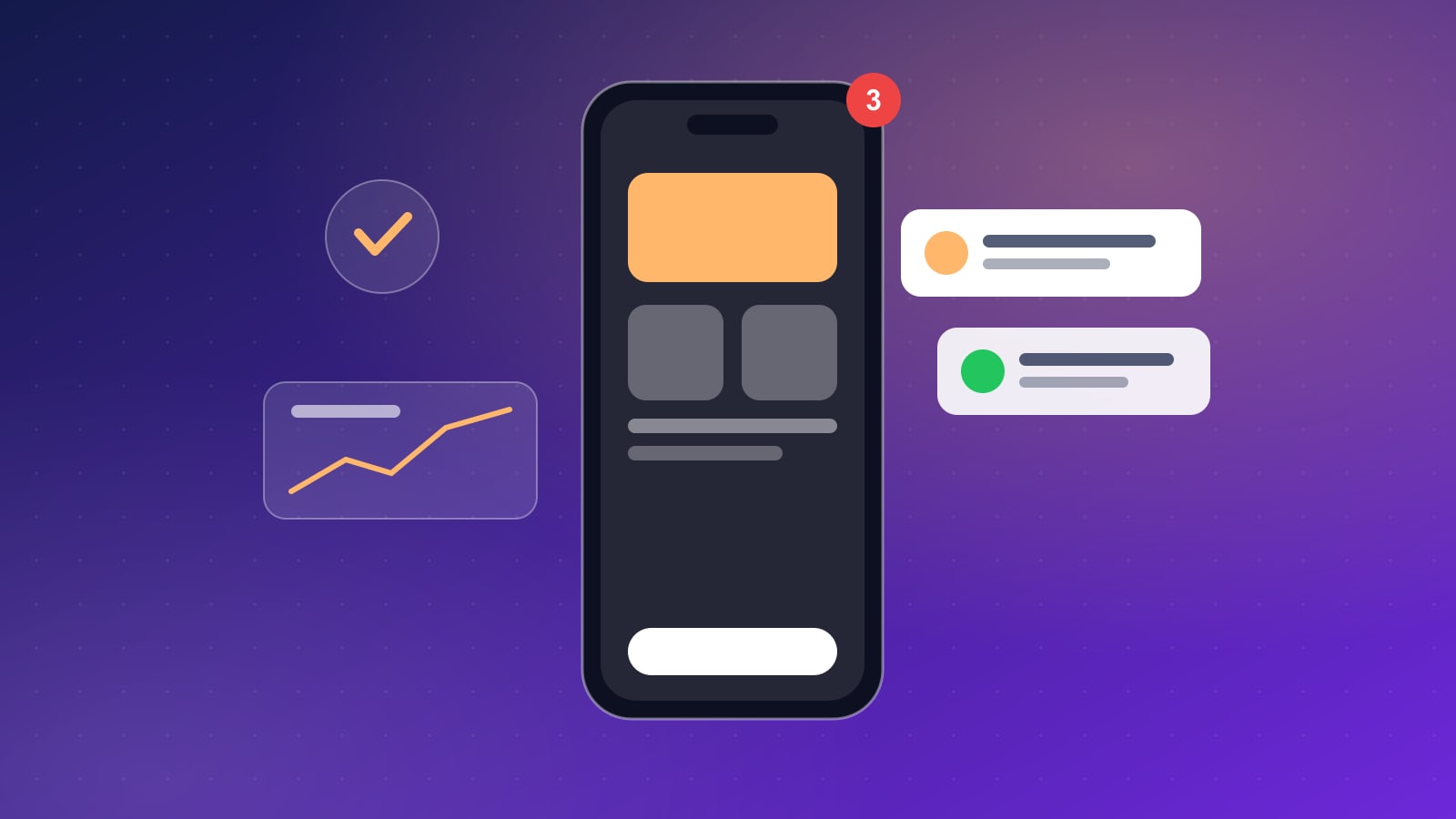
Think about the apps on your own phone's home screen. There are only a handful of businesses you've given that space to — the bank, the coffee shop, the supermarket, the airline. They've earned a permanent spot within thumb's reach, and they get opened without a search, an ad or a single click on a competitor's link.
That's the real power of a mobile app. A website helps new customers find you. An app helps existing customers keep choosing you.
And because keeping a customer is almost always cheaper than winning a new one, that shift can have an outsized effect on revenue.
Website vs app: they do different jobs
This isn't an either/or decision. Most businesses need a website first — it's how people discover you through search, ads and links. An app becomes valuable once you have customers who interact with you repeatedly.
| Website | Mobile app | |
|---|---|---|
| Best at | Being discovered, first impressions, SEO | Retention, repeat use, speed, loyalty |
| Audience | New visitors | Existing, engaged customers |
| Access | Search, links, ads | One tap from the home screen |
| Re-engagement | Email, retargeting ads | Push notifications, in-app messages |
| Device features | Limited | Camera, GPS, biometrics, offline, wallet |
If you'd like a deeper look at the website side, we wrote about why most business websites don't bring results.
Seven ways an app boosts your business
1. A direct line to your customers
Push notifications are one of the most powerful marketing channels there is — they land on the lock screen, not in a crowded inbox or behind an algorithm. Used respectfully, they're perfect for order updates, appointment reminders, flash offers, restocks and personalised recommendations.
The rule: every notification should be useful to the customer, not just to you. Get that right and people keep them switched on.
2. Faster repeat purchases
Saved addresses, saved payment methods, order history and "reorder" buttons turn a five-minute checkout into a ten-second one. For businesses with frequent repeat purchases — groceries, food, retail, services — that friction reduction goes straight to the bottom line. It's exactly why the online supermarket Fatafut Mart launched a companion Android app alongside its store: regular customers get the fastest possible path to reorder.
3. Loyalty that actually feels rewarding
Digital loyalty cards, points, tiers, referral rewards and member-only prices all live naturally in an app. They're easier to use than a paper card and give you a clear view of who your best customers are and what they buy.
4. Bookings, subscriptions and self-service
For service businesses, an app can take a huge load off the front desk. Customers book, reschedule, pay and manage their own accounts — any time of day.
When we built the Twin Dragons Academy app, a martial arts school replaced paper attendance registers and spreadsheet-tracked renewals with live check-ins, automated subscription reminders for parents and push notifications for events. Staff time went back to teaching; parents got clarity.
5. Features only a phone can offer
Apps can use the hardware in your customer's pocket in ways a website can't easily match:
- Camera — scan documents, barcodes, receipts or show a problem on live video. iPlumberPro uses live video so homeowners can show a licensed plumber the problem before anyone books a visit.
- Location — find the nearest branch, track deliveries, check in on arrival.
- Biometrics — secure login with a fingerprint or face.
- Offline mode — keep working in poor-signal areas.
- Wallet and payments — fast, secure checkout.
6. Better data, better decisions
An app shows you exactly how your most engaged customers behave: what they browse, how often they return, what they buy together, and where they drop off. That insight improves your marketing, your product range and your service — across every channel, not just the app.
7. Brand presence and credibility
A polished, fast app signals that you're an established, modern business. Your logo on someone's home screen is a daily reminder that you exist — the kind of brand presence ads can't buy.
Apps aren't just for customers
Some of the highest-return apps we build are never seen by the public. Internal apps for field teams, drivers, technicians and warehouse staff replace paper forms, phone calls and spreadsheets with real-time data:
- Job sheets and digital signatures on site
- Photo evidence and inspection checklists
- Stock counts with barcode scanning
- Live location and status for dispatch
If your team spends time out of the office, an internal app can be one of the fastest paybacks in your entire technology budget. (It pairs naturally with business automation.)
Does your business actually need an app? A checklist
An app is likely to pay off if several of these are true:
- Customers buy from you or interact with you more than once a month
- You run bookings, subscriptions, memberships or loyalty programs
- You want to reach customers directly without paying for ads each time
- Your service benefits from camera, location, notifications or offline use
- You have field staff who rely on paper or phone calls
- Competitors' apps are making your experience look dated
If none of these apply — for example, customers buy from you once every few years — a fast, mobile-optimised website is probably the better investment for now.
Native, cross-platform or PWA?
- Native apps (Swift for iOS, Kotlin for Android) give maximum performance and platform integration, but mean two separate codebases.
- Cross-platform apps (such as Flutter) use one codebase for both iOS and Android. For most business apps, this delivers near-native performance at significantly lower build and maintenance cost — it's our default recommendation for most clients.
- Progressive Web Apps (PWAs) are websites that behave like apps. They're cheap and quick but have limitations, particularly around iOS notifications and device features.
What it takes to build one
A well-run app project usually moves through these stages:
- Discovery — goals, users, core features and what not to build yet
- UX and UI design — flows and screens tested before a line of code is written
- MVP build — the smallest version that delivers real value
- Testing — across devices, screen sizes and network conditions
- App Store and Play Store launch — listings, screenshots and review guidelines
- Iterate — analytics and user feedback drive the next release
Starting with a focused MVP is the single best way to control cost and risk. Launch the features customers care most about, learn from real usage, then grow the app from there.
Making the most of your app after launch
An app isn't "done" at launch. The businesses that get the most value:
- Promote it everywhere — at the till, on receipts, on the website, in emails
- Give people a reason to download — an app-only discount, faster booking, exclusive rewards
- Keep notifications relevant and let users choose what they receive
- Ship regular updates based on analytics and reviews
- Reply to App Store reviews — it builds trust and improves your rating
The bottom line
A mobile app turns occasional customers into regulars. It gives you a direct, free marketing channel, makes buying and booking effortless, and unlocks features and insights a website alone can't provide.
For the right business, it's not a nice-to-have — it's how you stay on the home screen, and top of mind.
Thinking about an app for your business? Our mobile app development team builds iOS and Android apps with Flutter and native technologies — from customer-facing loyalty and booking apps to internal tools for field teams. Tell us your idea, and we'll help you shape it into an MVP worth launching.
Founder of Aizsol Technologies. Shazaib and the team build web platforms, mobile apps, AI tools and automation for businesses across the UK, US, Europe and the Middle East.